Review: Coquette Bow Cowgirl Boots for Craft Fairs
As an embroidery designer who has spent countless weekends behind a booth table, I know that the difference between a browsing customer and a buying customer often comes down to visual impact. When I first loaded the Coquette Bow Cowgirl Boots design onto my machine, I was looking for more than just cute aesthetics. I was looking for a reliable craft fair product that could carry a booth display. This design, described as bringing a touch of sweet western charm, sits at the perfect intersection of two massive trends: the enduring love for country style and the viral rise of coquette aesthetics.
First Impressions and Visual Appeal
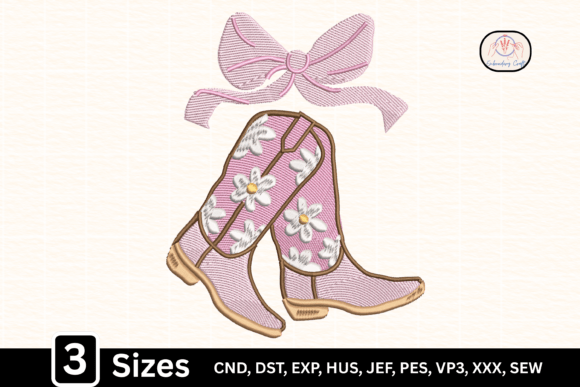
The immediate reaction to this machine embroidery design is one of playful femininity. It does not feel aggressive or overly rustic; instead, it feels soft, decorative, and intentionally curated. The combination of pink western floral boots with bow accents creates a narrative that appeals to a wide demographic. For an Etsy seller or a boutique maker, this visual language is powerful. It signals that the item is handmade with care, yet modern enough to fit into a contemporary wardrobe or home.
When evaluating the design for a weekend market, I look for clarity. Does it read well from three feet away? The bold outline of the boot paired with the delicate detailing of the bows ensures that the design stands out without becoming visually cluttered. It strikes a balance between being a focal point and a charming accent, making it versatile for various design assets and products.
Product Versatility for Handmade Sellers
The true test of any digital embroidery file is its adaptability. Here is how I see this design performing across different categories in a real-world sales environment:
- Tote Bags and Market Bags: This is arguably the strongest application. A canvas tote featuring the Coquette Bow Cowgirl Boots becomes an instant bestseller. The flat surface allows the stitch work to lie smoothly, and the design is large enough to be noticed but not so large that it distorts the bag’s structure.
- Apron Embroidery: Kitchen and garden aprons are staple items at craft fairs. Placing this design on the bib or the lower corner adds a premium touch. It transforms a basic utility item into a handmade product that feels giftable and special.
- Tea Towel Embroidery: For smaller hoop sizes, this design works beautifully on flour sack towels. However, attention must be paid to the stitch density. Towels have a loose weave, so ensuring the design does not pull or pucker is critical for a professional finish.
- Embroidered Patches: Creating iron-on or sew-on patches is a low-risk, high-reward strategy. These can be sold individually or used to embellish denim jackets and hats. The distinct shape of the boot makes it ideal for patch formatting.
- Caps and Headwear: While popular, curved surfaces are tricky. If you choose to embroider this on caps, ensure the design is scaled correctly to fit the front panel without wrapping around the sides, which can cause registration issues.
Production Practicality and Batch Selling
For those of us running a small shop product line, time is money. The Coquette Bow Cowgirl Boots appears to be designed with production efficiency in mind. The lines are clean, suggesting that the digitizing prioritizes smooth thread paths. This is essential for batch production. If you are preparing fifty tote bags for a holiday market, you need a design that runs reliably without constant thread breaks or trimming.
Photography is another crucial element. This design photographs exceptionally well for online listings. The contrast between the pink hues and neutral fabric backgrounds creates a soft, inviting image that performs well on social media. Creating a printable mockup or a digital preview for your Etsy listing is straightforward because the subject matter is universally recognizable and aesthetically pleasing.
Careful-Use Notes for Professional Results
While the design is strong, successful execution requires attention to technical details. As an experienced designer, I advise checking the following before committing to a full production run:
- Fabric Texture: Avoid highly textured fabrics like thick terry cloth unless you use a substantial cut-away stabilizer. The fine details of the bows may get lost in deep piles.
- Thread Colors: The description mentions pink western floral elements. Ensure you have high-quality rayon or polyester threads that offer a slight sheen. Matte cotton threads might make the design look flat. Test your thread colors against your fabric to ensure sufficient contrast.
- Stitch Density: Review the density settings in your software. If the design is too dense for lightweight fabric, it will cause puckering. If it is too sparse for heavy denim, it may look unfinished. Always test on scrap fabric first.
- Small Details: If scaling the design down for small pouches or baby items, verify that the tiny floral elements remain clear. Some machines struggle with very small satin stitches.
- Dark Fabric: If embroidering on black or navy, consider using a white underlay or adjusting the thread palette to ensure the pink pops. Without proper contrast, the design may disappear.
Enhancing Brand Consistency and Buyer Engagement
Using the Coquette Bow Cowgirl Boots consistently across your product line helps build brand recognition. Imagine a booth where the tote bags, aprons, and pillow covers all feature variations of this same theme. This cohesion signals professionalism and thoughtfulness to buyers. It turns individual items into a collection, encouraging customers to buy multiple products.
Furthermore, this design invites engagement. Customers often stop to touch embroidered items, feeling the texture of the stitches. The tactile nature of commercial embroidery adds perceived value. A plain tote bag might sell for ten dollars, but one with intricate, high-quality embroidery can command a significantly higher price point because it is seen as a unique finished product.
Final Designer Recommendations
Before you list this as a craft fair product, take these final steps. First, confirm the hoop size requirements. Ensure your machine can accommodate the necessary dimensions without re-hooping, which can lead to misalignment. Second, select the right stabilizer. For woven fabrics like canvas or cotton, a tear-away may suffice, but for knits or stretchy materials, a cut-away is non-negotiable to prevent distortion.
Lastly, always verify the licensing terms of the embroidery file. Ensure that the creator allows for commercial use of finished physical goods. Assuming the license permits it, this design is a robust addition to any portfolio. It captures the current cultural moment while remaining timeless enough to sell season after season. By focusing on quality production and strategic placement, the Coquette Bow Cowgirl Boots can become a cornerstone of your handmade business, driving both foot traffic at fairs and clicks in your online store.